Can a fuse box be moved? A practical homeowner's guide
Learn whether a fuse box can be moved, what relocation involves, safety considerations, permits, timelines, and costs. A practical guide for homeowners exploring relocation or alternatives with professional guidance.


Moving a fuse box is possible but not simple. It requires a licensed electrician, building permits, and adherence to local electrical codes. Feasible options include relocating the panel to a more accessible wall or basement, but load calculations, service wiring, and grounding must be redesigned. Don’t attempt this alone; seek professional evaluation and safe shutdown procedures.
Feasibility: is moving a fuse box worth it and what to check
The question can a fuse box be moved hinges on several practical factors. First, the service size and type of the current panel matter; older fuse boxes, especially antique or mixed systems, may require upgrades to meet modern safety standards. The distance to the new location, the availability of a continuous feed from the meter, and the feasibility of routing conductors through walls or ceilings all influence whether relocation is technically possible. Additionally, local code requirements dictate minimum working clearances, headroom, and access paths for the panel. If your home has limited space, relocating for easier access can improve daily use, but it also triggers design changes to the feeders, grounding, and bonding.
According to FuseBoxCheck, most relocations require a professional assessment and may involve upgrading service capacity. This means an upfront plan with a licensed electrician is essential to determine if a relocation or a reconfiguration—such as adding a subpanel—will achieve your goals without compromising safety or code compliance. Finally, consider the impact on neighboring rooms, aesthetics, and potential drywall or insulation work. Because this is not a DIY job for most homeowners, expect expert coordination with permits and inspections as part of the project.
Location strategy: choosing where to place the panel and how it affects you
Selecting a new location for a fuse box influences accessibility, safety, and future maintenance. Practical considerations include proximity to the main service entrance, avoiding moisture exposure, avoiding heat sources, and ensuring an unobstructed 30 to 36 inches of working space. If you live in a multi-story home, a relocation to a ground-level interior wall or a basement wall can reduce ladder time and streamline maintenance tasks. However, wiring runs must be planned to minimize voltage drop on longer feeders, and the route should minimize disruption to existing insulation and interior finishes. A relocation can shift the room usage footprint, so think about nearby outlets, lighting circuits, and whether the new space will complicate future repairs.
In many cases, homeowners find that a well-planned relocation also makes it easier to upgrade to AFCI/GFCI protection. It’s important to anticipate future needs, such as an added EV charger, kitchen remodeling, or workshop equipment, which might push you toward a larger service panel or a subpanel solution. The goal is a layout that improves safety and reliability while staying within code requirements.
Code, permits, and inspections: what you need to know before moving a panel
Relocating a fuse box almost always involves building permits and electrical permits. Local AHJs (authority having jurisdiction) require inspections at multiple stages, from initial plan review to final commissioning. The process ensures grounding and bonding, correct conductor sizing, proper enclosure, and appropriate overcurrent protection. Electrical codes also dictate proper fixation, panel height, accessibility, and clearance from water sources or combustibles. If you’re considering moving the main panel, you must coordinate with your utility to manage service disconnects and metering impacts. Avoid any unpermitted work, as missing approvals can lead to fines, the need to undo work, or re-inspection fees.
FuseBoxCheck’s analysis shows that securing permits early and documenting inspections helps prevent delays. A qualified electrician will typically submit plans, schedule inspections, and ensure all labeling and labeling changes reflect the new arrangement, including circuit directory updates and safety warnings.
Subpanels vs moving the main: alternative approaches to improve access
If the main panel relocation proves too invasive or expensive, a subpanel in a more convenient location is often a practical substitute. A subpanel can provide easier access to critical circuits without relocating the entire main cabinet. This option may require upgrades to grounding and bonding, as well as ensuring the feeder from the main panel to the subpanel is appropriately sized. Subpanels can also reduce the amount of remodeling required and can be a kinder path for future expansions. The choice hinges on load calculations, space, and whether you want to consolidate circuits for easier maintenance. Always have a professional perform a load audit to determine if a subpanel will meet your long-term needs while maintaining code compliance and safety.
Planning, coordination, and the timeline you should expect
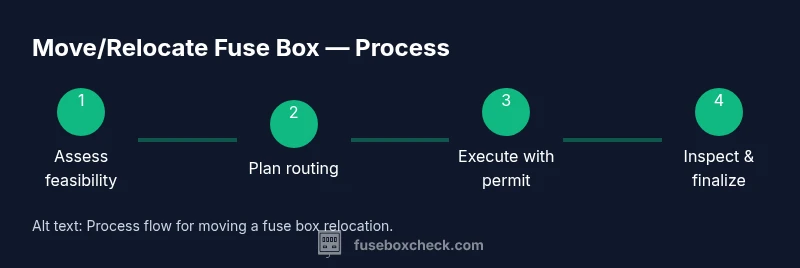
A move or reconfiguration involves multiple steps: feasibility assessment, permit acquisition, utility coordination, actual relocation work, testing, and final inspections. Expect scheduling to align with inspections and permit review timelines, which vary by locality. The fastest scenarios occur in homes with straightforward layouts and existing, accessible routes for feeders; the longest cases arise when structural work or service upgrades are required. Throughout the process, keep lines of communication open with your electrician, the AHJ, and any utility representatives to prevent scope creep and miscommunications. Proper planning minimizes rework and helps you stay on track with your budget and timeline.
Common pitfalls and red flags to avoid
Be cautious of low bids that omit permit costs or fail to provide a clear scope of work. Skipping a required grounding update or ignoring heat and moisture risks can create dangerous conditions. A panel relocation without a proper load calculation may lead to nuisance tripping or overloading. If the existing panel is in a high-traffic area or exposed to humidity, you should consider a safer alternative before proceeding. Always prioritize a documented plan, professional assessment, and adherence to code requirements to ensure the relocation is safe and compliant.
Alternatives to relocation: when moving the fuse box isn’t worth it
If relocation isn’t viable, focus on accessibility improvements like reorganization of breakers, installing a clear panel cover, or relocating nearby outlets for better service interaction. In some homes, a surface-mounted or recessed panel on a more convenient wall with improved lighting and signage can dramatically improve everyday usability without a full relocation. Discuss these options with your electrician to determine the best balance between safety, cost, and disruption.
Tools & Materials
- Voltage tester (non-contact preferred)(Use to verify de-energized circuits before touching panel components)
- Lockout/Tagout kit(Mandatory for securing circuits during work)
- Insulated gloves and eye protection(Personal protective equipment rated for electrical work)
- Screwdrivers, pliers, wire strippers (insulated)(Tools sized for panel screws and conduit fittings)
- Conduit (EMT or PVC) and fittings(For safe routing of feeders between locations)
- Appropriate feeders and wiring (per NEC)(Feeder size must match load and panel rating; use correct gauge)
- Grounding rod or grounding electrode system (if required)(Updater may be needed if service changes occur)
- Permits and inspection fees(Local permits; ensure plans and inspections are documented)
- Measuring tape, level, and stud finder(For accurate mounting and alignment)
Steps
Estimated time: 1-3 days
- 1
Assess feasibility and scope
Have a licensed electrician perform a preliminary assessment of load, routing options, and whether relocation or a subpanel solution best fits your home. They’ll review existing service capacity, potential trenching or wall modifications, and code implications. This step sets the foundation for permits and scheduling.
Tip: Document existing panel location and note any moisture or heat concerns that could affect safety. - 2
Obtain permits and coordinate with utility
Your electrician will prepare plans for permit submission and coordinate any required utility involvement. Permits ensure code compliance and provide a safety net through inspections. Expect some paperwork and a review period before work begins.
Tip: Ask for a written timeline from the authority and include it in your project plan. - 3
Shut off power and secure the work area
With the utility or main disconnect, isolate power to the premises. Use lockout/tagout to prevent accidental energizing during relocation. This step is critical for safety and must be supervised by the electrician.
Tip: Double-check with a tester before touching any panel components. - 4
Route feeders and mount the new panel location
Install feeders along the planned path using appropriate conduit and fittings. Mount the new panel securely, ensuring accessibility and correct clearance. If a subpanel is chosen, install the feeder from the main panel to the subpanel accordingly.
Tip: Keep feeder runs as direct as possible to minimize voltage drop and future maintenance needs. - 5
Reconnect circuits and update labeling
Reconnect circuits to the new panel or subpanel, verify each branch circuit is correctly mapped, and update the directory. Grounding and bonding must be rechecked and confirmed per code.
Tip: Label circuits clearly to improve future safety checks and troubleshooting. - 6
Test, inspect, and obtain final approvals
Restore power and perform comprehensive testing of all circuits. Coordinate with the AHJ for inspections and file any required inspection reports. Address any issues found during inspection to achieve a clean bill of health.
Tip: Request a copy of the inspection report for your records and future maintenance. - 7
Finalize and document the new configuration
Ensure all drawings, permits, and specifications reflect the new configuration. Keep this documentation in a safe place for future remodels or reconfigurations.
Tip: Store digital copies of permits and diagrams alongside a spare set of printed plans in case repairs are needed.
Your Questions Answered
Can I move a fuse box myself?
No. Relocating a fuse box is a hazardous task that typically requires a licensed electrician, permits, and inspection. DIY attempts can void warranties and create serious safety risks.
This is not a DIY job. Hire a licensed electrician to assess feasibility, obtain permits, and perform the relocation safely.
What are the main risks of relocating a fuse box?
Electric shock, fire hazards, improper grounding, and code violations are the primary risks. Proper planning, permits, and professional installation mitigate these risks.
Relocating the panel carries shock and fire risks if not done correctly; professional installation is essential.
How long does relocation usually take?
Duration varies with layout and scope, typically several days to weeks, depending on permits and inspections. A professional keeps you updated on milestones.
The time frame varies, but you should plan for several days, including inspections.
Do I need permits to move a fuse box?
Yes, permits are usually required. Your electrician will handle application, plan submission, and inspections with the local building department.
Permits are usually required; your electrician will manage the process.
What if relocation isn’t feasible? Are there alternatives?
A subpanel relocation or reconfiguring circuits in place can offer easier access without moving the main box. An electrician can determine the best approach.
If relocation isn’t feasible, a subpanel or different layout may solve access issues.
Is relocation always necessary for home renovations?
Not always. Evaluate the renovation scope with an electrician, as some changes may be accomplished with better panel access rather than a full move.
Sometimes you can achieve access improvements without moving the main panel.
Watch Video
Highlights
- Hire a licensed electrician for feasibility review
- Permits and inspections are typically required
- Relocation may require a service upgrade
- A subpanel can be a safer alternative in some cases
- Costs and timelines vary by region and scope