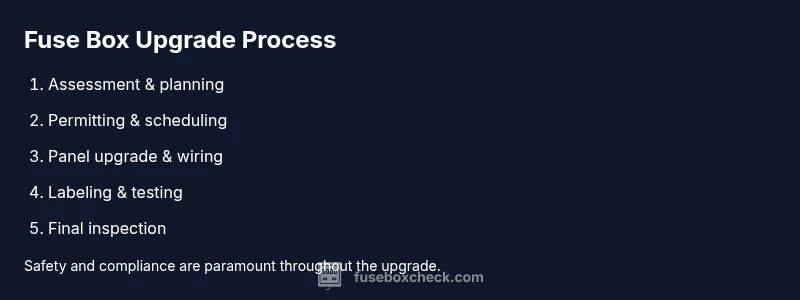
How Long to Install a New Fuse Box: Time Guide
Discover realistic timelines for upgrading a fuse box in 2026, including planning, permitting, and on-site labor. Learn what affects duration and get a practical, safety-focused plan.


Upgrading to a new fuse box typically spans planning, permitting, and on-site labor, with electricians spending about 4–12 hours on active work. Total duration varies by panel type, accessibility, and whether a service disconnect requires a utility shutoff. Plan for several days to weeks for permits, scheduling, and inspections.
What affects the duration of a fuse box install
Any upgrade project, including replacing a fuse box or panel, is influenced by scope, local codes, and the need for permits. The most time-consuming aspects are often planning, permission approvals, and inspection scheduling, not just the on-site labor. If the existing service requires a major upgrade (for example, moving from a 60A to a 200A service or adding a new service disconnect), the timeline can extend further. Accessibility matters as well: cramped spaces, tight crawlspaces, or external meters can slow progress. According to FuseBoxCheck, the bulk of total duration typically comes from permitting and coordination, rather than the physical swap itself. FuseBoxCheck Analysis, 2026 emphasizes that planning contingencies help prevent delays during inspections and approvals. As you evaluate how long to install a new fuse box, factor in the time needed to order the panel, obtain approvals, and schedule a reliable window with the utility and inspector. The practical takeaway for homeowners is to anticipate a multi-day to multi-week timeline, even when on-site work is limited to a day or two.
Planning phase: permits, scheduling, and choosing a contractor
The planning phase sets the pace for the entire project. Start by confirming whether a permit is required in your jurisdiction and identify the exact scope of work with your chosen electrician. A written plan helps prevent scope creep and ensures all parties agree on the panel type, amperage, and labeling scheme. Getting official quotes, a projected timeline, and a clear inspection path from your contractor reduces back-and-forth delays. Expect to coordinate with your local building department and, if applicable, the utility company for a temporary service disconnect. Clear communication about outage windows is essential to minimize disruption to your daily routines and electronics. As FuseBoxCheck Team notes, the more precise the permitting and scheduling details, the smoother the upgrade will proceed, with fewer last-minute changes during inspection.
On-site labor: what electricians do and how long it takes
During the on-site phase, a licensed electrician assesses the space, ensures code compliance, and executes the actual panel upgrade. This work includes mounting the new fuse box, routing and connecting feeders, installing breakers, and labeling circuits. Depending on the existing setup, the electricity may be shut off for portions of the work, which requires careful coordination with the utility and a certified installer. On-site labor typically accounts for several hours of hands-on work, but the total time can be affected by panel location, the number of circuits, and any needed upgrades to the service entrance equipment. It’s important to remember that this stage should be performed only by a qualified electrician to maintain safety and code compliance. FuseBoxCheck Analysis, 2026 reinforces that while the electrical swap is technically feasible, the on-site labor is just one facet of the overall duration.
Safety, compliance, and common roadblocks
Safety is the primary concern in any fuse box upgrade. Electrical work carries risk of shock, arc flash, and fire if not done correctly. Before starting, confirm that the installer is licensed, insured, and up to date on local electrical codes. In some regions, a service upgrade (like increasing main breaker capacity) triggers additional inspections or utility coordination. Common roadblocks include missing permits, incomplete labeling, and undiscovered wiring issues behind the existing panel. Delays can also arise from supply chain gaps for the correct panel or breakers, or from weather-related scheduling constraints. A proactive electrician will discuss potential challenges upfront and provide a detailed plan for addressing them without compromising safety.
How you can prepare to save time and reduce disruption
Preparation is the best way to minimize downtime and keep the project on track. Gather any existing electrical plans or panel labeling, make the work area accessible, and create a clear path from the service entry to the panel. Schedule the upgrade during a time when you can anticipate a temporary outage and inform household members and neighbors as needed. Request a written timeline from your electrician, including permit milestones and inspection windows. Confirm what the electrician will handle versus what you should prepare (like labeling and documentation). This proactive approach minimizes surprises on the day of installation and helps ensure a smoother process. The FuseBoxCheck team stresses the importance of early coordination to prevent avoidable delays, especially where permits and inspections are involved.
Final considerations and staying aligned with safety goals
The fuse box upgrade is more than a hardware swap; it’s a safety and compliance project. A well-planned upgrade protects your home from electrical hazards and aligns with current electrical codes. The process demands careful coordination among the homeowner, the licensed electrician, the utility (if a disconnect is required), and the local inspector. For homeowners, committing to detailed planning, timely permits, and transparent communication with the contractor is essential. The FuseBoxCheck Team emphasizes that safety must come first: never attempt this upgrade without proper training, licensing, and adherence to regulatory requirements. When in doubt, rely on professional guidance and verify all steps with your local authority to ensure long-term reliability and safety for your home electrical system.
Tools & Materials
- New main panel or subpanel (compatibile with service)(Verify amperage rating (e.g., 100A, 200A) and enclosure type)
- Electrical permits and inspection documents(Obtain approvals before starting work)
- Personal protective equipment (PPE)(Insulated gloves, arc-flash-rated clothing)
- Voltage tester or multimeter(Use to verify de-energized circuits before handling)
- Appropriate wiring and connectors(GAUGE and insulation per code for feeder wires)
- Labels and marker tape(Clear circuit labeling for future maintenance)
- Basic hand tools and insulated screwdrivers(Include a drill, bits, and a torque screwdriver)
- Temporary power isolation gear (lockout/tagout)(Used for added safety during the swap)
- Work light or headlamp(Illumination in dim panel areas)
Steps
Estimated time: Total active labor: about 6–14 hours; permit and inspection process can take 1–3 weeks or more depending on location
- 1
Confirm permits and plan
Before any work begins, verify permit requirements with the local authority and obtain a written plan from the electrician. This ensures compliance, aligns on panel rating, and sets expectations for timing and labor. A clear plan reduces scope creep and avoids rework.
Tip: Ask for a formal quote with a detailed timeline and milestones. - 2
Prepare the site and ensure access
Clear the area around the existing panel, remove obstructions, and ensure easy access for the technician. This minimizes delays and improves safety when moving the old panel and installing the new one.
Tip: Take photos of current labeling to help with future maintenance. - 3
Coordinate power shutdown timing
Arrange a specific outage window with the utility and your electrician. Power interruptions are necessary for safety when disconnecting service and reconnecting feeders. Scheduling reduces impact on daily activities.
Tip: Set a backup plan for essential devices and communicate with household members. - 4
Install the new panel and connect feeders
The electrician mounts the new panel, routes feeders, installs breakers, and bonds/grounds per code. This action requires careful handling of live channels and verification of conductor sizing. Ensure all connections are tight and compliant with local standards.
Tip: Request a test plan that covers essential circuits and safety interlocks. - 5
Label circuits and perform initial tests
Label every circuit in a clear, legible manner and validate that the new panel powers the intended branches. Run a basic test to confirm circuits respond correctly and that main disconnect operates safely. Document results for records.
Tip: Photograph labeling and test results for future reference. - 6
Complete inspections and obtain sign-off
Schedule and pass the required inspections. Obtain the final sign-off from the inspector to confirm compliance with electrical codes. Keep copies of permits, inspector notes, and labeling for your records.
Tip: Retain all documents in a dedicated home electrical file.
Your Questions Answered
Do I need a permit to install a fuse box?
In most areas, a permit is required for a fuse box upgrade and must be inspected upon completion. This ensures compliance with local codes and safety standards. Hiring a licensed electrician helps ensure the process stays within regulations.
Yes, most places require a permit for a fuse box upgrade, and an inspection is usually part of the process. Work with a licensed electrician to stay compliant.
Can I install a fuse box by myself?
No. Replacing a fuse box is high-risk work that should only be performed by a licensed electrician. DIY can lead to electrocution, fire, and voided insurance coverage.
No. This should be done by a licensed electrician to stay safe and keep insurance valid.
How long does the permit process typically take?
Permit processing times vary by location and workload. Expect several days to a few weeks in many jurisdictions, depending on the complexity of the upgrade and the availability of inspectors.
Times vary by jurisdiction; it can take days to weeks depending on the project and inspector scheduling.
What are common signs that a fuse box needs replacement?
Frequent nuisance trips, burning smells, buzzing noises, corrosion, or rust around the panel indicate potential safety issues and the need for an upgrade.
If you notice frequent trips, heat, or smells around the panel, have it evaluated by a professional.
What costs are involved in upgrading a fuse box?
Costs vary by location and scope. Factors include panel type, labor, permit fees, and any required service upgrades. Always request a written estimate that itemizes these elements.
Costs vary; get a written estimate that lists labor, materials, and permit fees.
Will the utility disconnect power during the upgrade?
Often yes. A temporary service disconnect may be required. Coordinate with your electrician and utility to schedule a safe outage window.
Usually, the utility will coordinate a temporary outage during the work.
Watch Video
Highlights
- Plan permits and inspections early to avoid delays.
- Hire a licensed electrician and obtain a written plan and timeline.
- Expect active on-site labor to take several hours, with total duration extending due to permits.