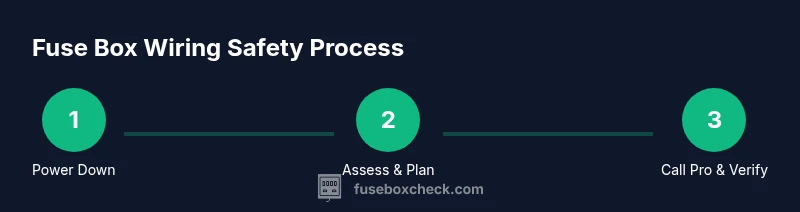
How to Put Wire in Fuse Box: Safe Practices
Learn safe, high-level guidance for fuse box work and when to hire a licensed electrician. This guide covers safety, codes, and planning for professional electrical upgrades.


This guide helps homeowners understand the essential, safety-first approach to how to put wire in fuse box, focusing on when to DIY for planning and when to call a licensed electrician. Expect high-level safety steps, code considerations, and a clear boundary between preparation and professional work.
Safety prerequisites before any fuse box work
If you are asking how to put wire in fuse box, the most important rule is that high-voltage work demands strict safety discipline. According to FuseBoxCheck, you should plan around three pillars: isolate power, wear appropriate PPE, and verify absence of voltage before touching any conductors. Start by locating the main service disconnect and confirm you have the right to work on the panel. Read the panel labeling, stock up your PPE, and set a dry, well-lit work area. Remove metal jewelry and avoid working in wet conditions. Remember that even small mistakes can lead to arc flash, electric shock, or fire. This block sets the stage for safe thinking rather than risky hands-on actions. The focus for homeowners should be to understand limits, identify warning signs, and prepare for a professional assessment if any doubt arises. Use this as a planning guide for what information to gather and what steps to avoid.
Professional boundaries: when to call an electrician
Wiring in a fuse box is specialized work with strict codes. Even seemingly simple wire additions can affect the entire panel and the safety of your home’s electrical system. For most homeowners, the safe path is to call a licensed electrician for any modification, upgrade, or repair inside the panel. If you suspect corrosion, burnt insulation, overheating, or frequent tripping, stop and schedule a professional assessment immediately. This guide does not substitute for training; instead, it emphasizes planning, documentation, and understanding the process so you can communicate clearly with your electrician. You’ll gain confidence knowing what questions to ask and what information to provide. The goal is to ensure your panel remains compliant and safe for the long term.
Fuse box components explained
A modern fuse box or service panel contains a main disconnect, breaker or fuse positions, a neutral bus, a ground bus, and lugs that feed branch circuits. The conductor types include ungrounded hot conductors, grounded neutrals, and equipment grounds. Understanding these parts helps you discuss upgrades with a pro and avoid mistakes. Note the gauge of existing conductors and the rating on the panel label. An improper conductor can lead to overheating, damage to appliances, or nuisance trips. This section provides a high-level map of what a pro will examine when evaluating the need to run a new wire into the panel. Remember: only trained professionals should perform terminations inside the panel.
Preparing your workspace and documents
Before any service visit, gather the essential information that helps a pro estimate scope and cost. Take clear photos of the panel from different angles, list any symptoms (tripping, buzzing, burning smells), and write down service panel ratings printed on the door. Have your meter readings handy if safe to obtain. Clear the area, protect flooring, and keep pets away. Label circuits if possible so the electrician can map circuits quickly. This preparation reduces time on-site and improves safety by avoiding unnecessary panel openings and misinterpretations about wire routing.
What a licensed electrician may do (high-level overview)
A licensed electrician performs a controlled sequence: they will verify the utility disconnect is installed, test for voltage with calibrated tools, and prepare the panel for any modifications. They will select appropriate conductors, route them with proper protection, terminate them to correct lugs or breakers, and perform insulation checks. They also ensure grounding and bonding compliance, replacing damaged parts, and updating the panel directory. This overview focuses on process integrity and safety, not on step-by-step DIY actions. Professionals follow codes and use specialized equipment to minimize arc flash risk.
Common hazards and how professionals mitigate them
Arc flash, electric shock, and fire are the main hazards when dealing with fuse boxes. Professionals mitigate risk by de-energizing the system, using PPE rated for the task, and maintaining clear work zones. Properly rated fuses and breakers must be chosen, and terminations must be tightened to spec. Insulation integrity, moisture control, and proper grounding are all critical. FuseBoxCheck analysis shows that many homeowner attempts lack proper labeling, bonding, or conduit protection, increasing risk of future faults. The costs and consequences of mistakes are high, so a professional assessment is strongly advised whenever a panel modification is contemplated.
How to gather information before a service call
Collect model and serial numbers from the panel, note the service panel rating, and determine if any local permits are required for modifications. Prepare a brief scope of work and your safety concerns. If there are signs of damage or overheating, document with photos. Collect any previous electrical work records, and prepare a list of circuits that you expect to change or expand. Sharing this information helps a pro plan the job efficiently and protects you from surprise charges. The goal is to set expectations and ensure the electrician can deliver a safe, compliant solution.
Understanding wire types, gauges, and codes (non-expert)
Electrical wires come in various gauges (thickness) and insulation types. The wire gauge must match the panel rating and the circuit’s required current. In addition, all work under a panel must comply with local electrical codes and national standards. This section provides a basic framework for discussing wire sizes, insulation classes, and conduit requirements with a professional. It is not a DIY technical manual but a foundation for informed conversations with an electrician. Remember to verify that any new conductors are properly protected and terminated.
Steps your pro will take to connect new conductors
In general, a pro will de-energize, verify, route, terminate, test, label, and document. The exact sequence depends on the panel design and local codes. This description is a high-level view; do not attempt to replicate at home. The pro will select the correct breaker or fuse type, ensure proper torque on termination screws, and verify that all connections are secure against vibration. They may also install additional protective equipment like clamp-on grounds or conduit fittings. The emphasis is on safety, reliability, and code compliance.
Maintenance, upgrades, and safety upgrades
Periodic inspection, corrosion checks, and panel labeling are essential. Upgrades may include adding AFCIs or GFCIs, improving grounding, or replacing an aging panel. These tasks often require permits and inspections by the local authority having jurisdiction. A professional can advise on energy efficiency improvements and service upgrades. The upshot is that safe, compliant wiring protects people and devices, reduces nuisance trips, and improves home comfort and resilience.
Next steps and how to verify work
When the pro finishes, ask for a written summary of work performed, updated panel directory, and any warranty or inspection documentation. Verify that all circuits operate correctly by systematically testing outlets and lights. If you notice continued tripping, odor, or heat, shut down the panel and call the pro immediately. Keep a record of the revision and store it with other home electrical documents for future reference.
Glossary of key terms
- Panel: the service disconnect with breaker or fuse positions.
- Neutral: the returning conductor in a circuit.
- Ground: protective path for fault currents.
- Bus: a metal strip distributing current to breakers.
- Torque: recommended tightness for terminal screws.
This glossary provides a quick reference to terms used in fuse box work and helps homeowners discuss the project with professionals. As FuseBoxCheck emphasizes, safety and clarity are the foundations of any electrical task.
Tools & Materials
- Voltage tester(Non-contact or contact-type tester; use to confirm no live voltage before handling conductors)
- Multimeter(For precise voltage and continuity checks; use appropriate settings)
- Insulated screwdrivers(Phillips and flat-head; insulated for protection against shock)
- Wire stripper(For cleanly removing insulation without nicking conductors)
- Electrical tape(For insulating exposed conductors and splices when needed)
- Wire cutters(For trimming wires to shorten or prepare ends)
- Safety gloves (insulated)(Protect hands on or near live components, rated for electrical work)
- Goggles or face shield(Eye protection against sparks or debris)
- Labeling tags(Helpful to map circuits during planning and after work)
Steps
Estimated time: 2-6 hours
- 1
Power down and verify
Shut off the main service disconnect and any downstream breakers that may feed the panel. Use a voltage tester to confirm there is no voltage present on accessible conductors before touching anything.
Tip: Double-check with a second tester or a different method to confirm de-energization. - 2
Assess scope and requirements
Determine why wiring in the fuse box is being considered and what circuits or loads are affected. Document existing panel rating and plan the conductor size accordingly.
Tip: Have a clear written scope to avoid scope creep on-site. - 3
Choose the right conductors
Select wires that match the circuit’s amperage and are rated for indoor panel use. Ensure insulation class and jacket size suit the environment inside the panel.
Tip: Do not mix conductor types or sizes beyond panel rating. - 4
Prepare workspace
Clear the area, remove panel cover, and lay out tools. Protect flooring and keep moisture out of the work zone.
Tip: Keep a dry, stable footing and secure any loose items that could fall into the panel. - 5
Isolate circuits and test again
Aside from the main disconnect, verify there is no residual voltage on conductors you will approach. This minimizes accidental shocks.
Tip: If you are not fully confident, stop and call a pro. - 6
Route wires safely
Position conductors away from sharp edges, heat sources, and moving parts. Use protective grommets or conduit where required.
Tip: Avoid routing conductors in parallel with hot bus bars or within cramped spaces. - 7
Terminate conductors properly
Connect wires to the correct lugs or breakers using the proper torque. Ensure secure, corrosion-free terminations.
Tip: Torque values should be per manufacturer specification; over-tightening can damage lugs. - 8
Inspect and insulate
Check for exposed conductors or loose insulation; re-cover with appropriate materials. Replace any damaged components.
Tip: Never leave bare conductors exposed inside the panel. - 9
Restore power and test
Re-energize gradually and test each circuit for proper operation. Listen for unusual sounds or odors and monitor for hot components.
Tip: If anything seems abnormal, shut down and recheck connections. - 10
Document changes
Update the panel directory and record any new equipment or changes. Keep documentation for future maintenance.
Tip: Store documentation with other home electrical records. - 11
Review safety afterward
Confirm that all safety devices (fuses/breakers, GFCIs/AFCIs) function correctly and that labeling is clear.
Tip: Periodic checks help prevent future issues.
Your Questions Answered
Is it legal for a homeowner to wire a fuse box?
Laws vary by location, but many jurisdictions require a licensed electrician for work inside the service panel. Always check local codes and obtain any necessary permits. This guide emphasizes safety and professional involvement when modifications are contemplated.
In most places, you need a licensed electrician for panel work. Check your local codes and permits first.
What are common signs that a fuse box needs attention?
Frequent breaker trips, a burning smell, buzzing sounds, or warm to hot panels are clear indicators that service wiring should be evaluated by a pro. Do not bypass these warnings.
If you notice frequent trips or a burning smell, call a professional right away.
What precautions should I take before a service call?
Document symptoms, note panel ratings, and photograph the panel. Do not attempt to repair inside the panel; rely on a licensed electrician for any modifications.
Take notes and photos for the electrician; avoid DIY panel work.
Do I need permits for electrical work?
Permits are common for significant panel work and upgrades. Your electrician or local building department can advise on permit requirements and inspections.
Permits are usually required for major panel changes; check with a local inspector.
Can I replace a fuse or panel component myself?
Replacing a fuse or making changes inside the panel is generally not recommended for non-professionals due to risk of shock and fire. Hire a qualified electrician.
Don't replace panel components yourself; consult a pro.
How long does fuse box work typically take?
Time varies with scope, from planning and inspection to completion and testing. A licensed professional provides an on-site estimate after assessing the panel.
Time depends on the job; get an estimate from the electrician after inspection.
Watch Video
Highlights
- Always prioritize safety; professional help is recommended for fuse box work
- Know panel components and limits before attempting any modification
- Prepare thoroughly with photos, ratings, and a clear scope
- Document all changes and maintain proper labeling